01
Import the curriculum
Start from A-level, AP, or IB textbook chapters, syllabi, and exam objectives.
Turn every textbook into a visual AI tutor that students can explore, question, and remember.
TopoLogic maps A-level, AP, and IB concepts into visual, interactive, and AI-powered learning paths.
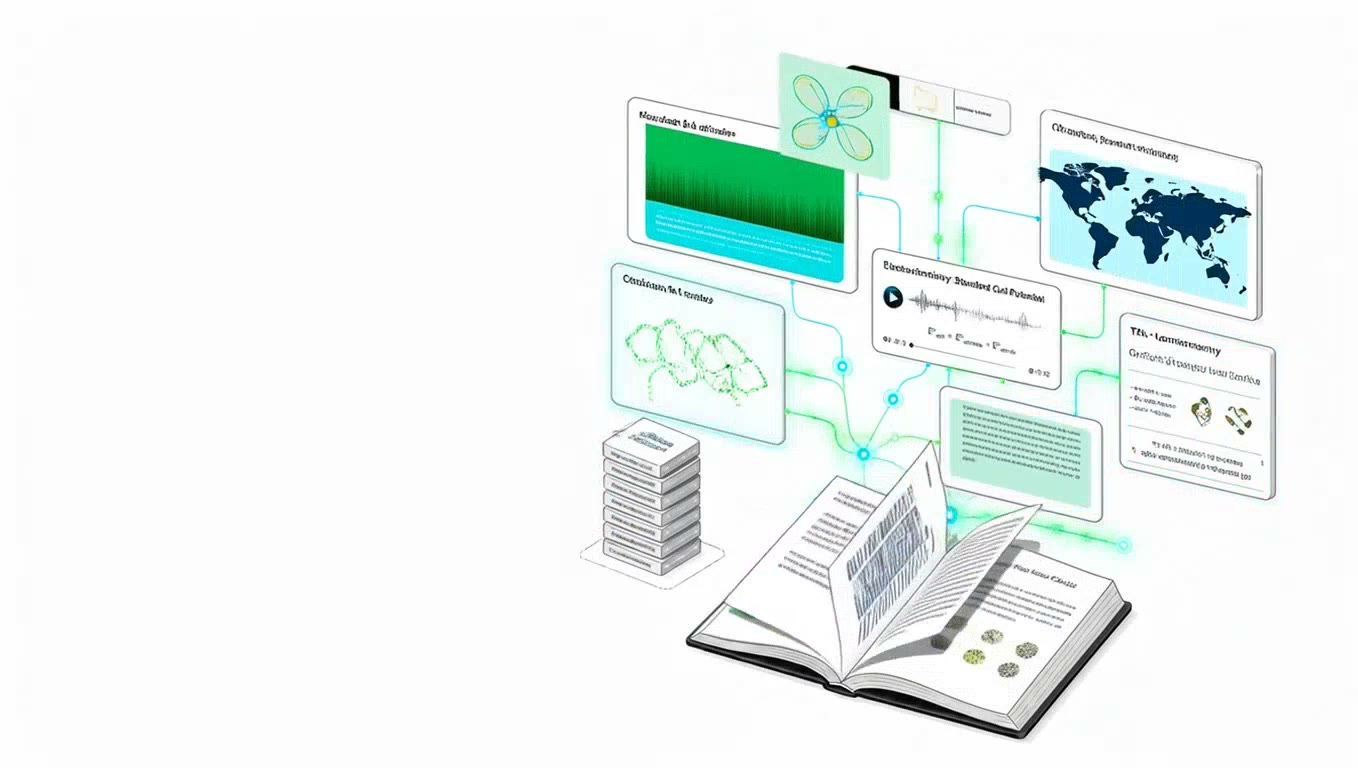
TopoLogic treats a textbook as structured knowledge, not static pages. The workflow turns dense curriculum content into a navigable graph and then renders each concept in the format that helps it make sense fastest.
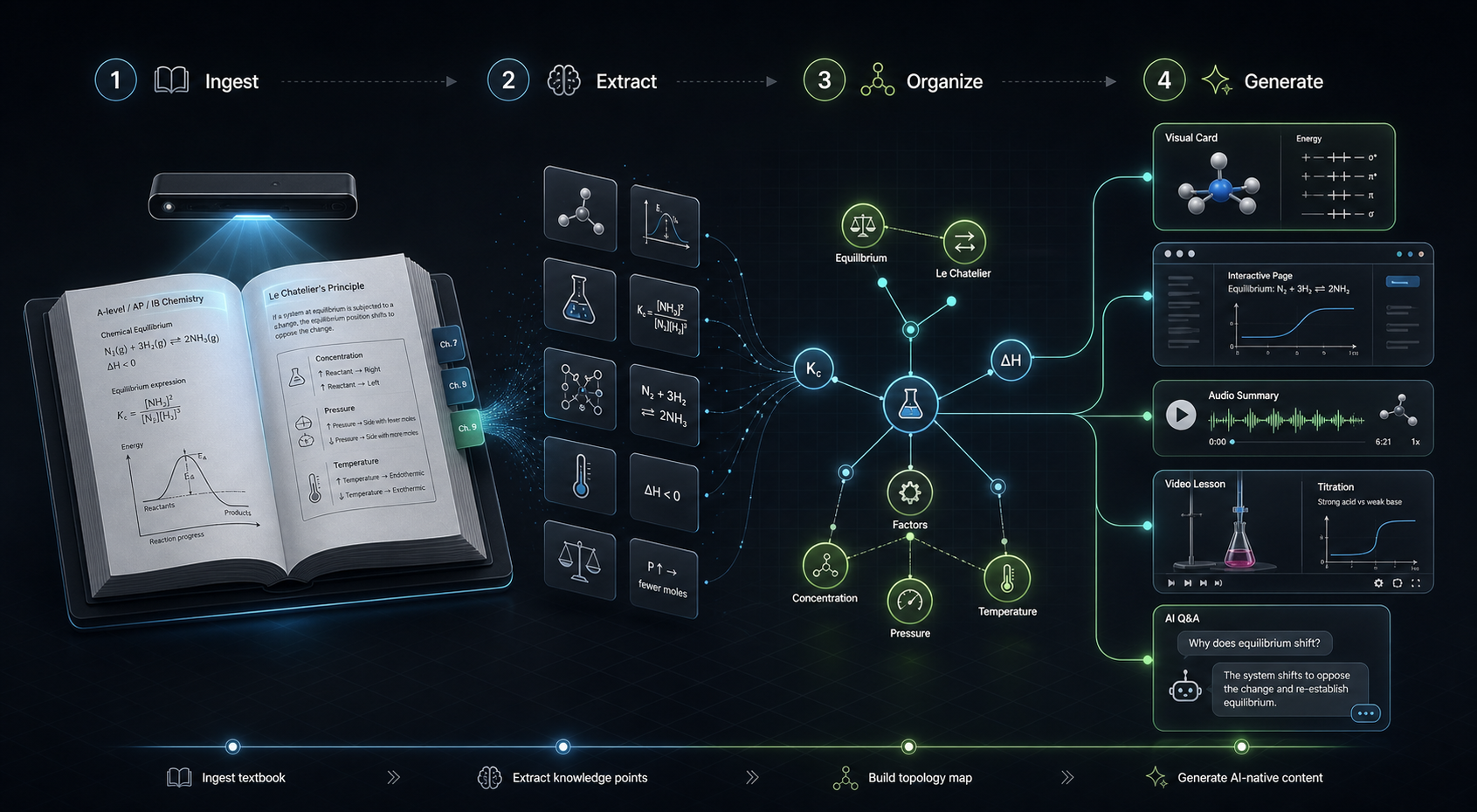
Start from A-level, AP, or IB textbook chapters, syllabi, and exam objectives.
AI breaks each chapter into atomic concepts, prerequisites, examples, and common misconceptions.
Every concept is connected into a map so students can see what comes before, after, and beside it.
Each node becomes visual cards, interactive pages, audio, video, text, and AI Q&A.
The same knowledge point can be read, seen, heard, clicked through, watched, and questioned. The platform chooses the format based on what the concept needs.
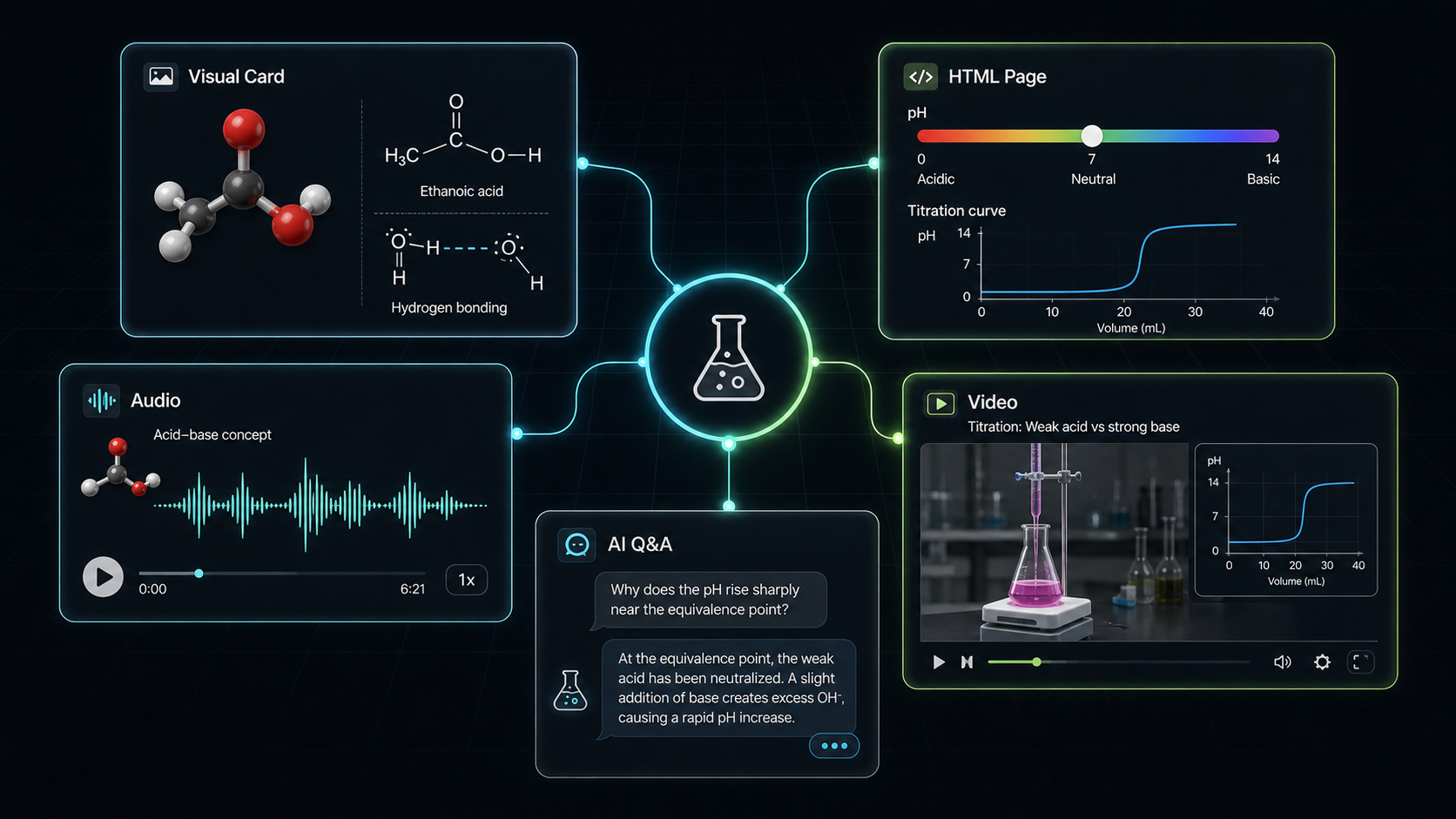
Concepts are stored as connected nodes with prerequisites, related ideas, exam links, and difficulty.
Difficult ideas become memorable diagrams, molecular scenes, process cards, and concept snapshots.
Students can click, reveal, simulate, compare, and test ideas directly in the browser.
Notebook-style explainers turn a concept into a short listenable lesson, with future custom voice playback.
For visual topics, TopoLogic can attach generated clips or route students to the best external lessons.
Students can ask follow-up questions inside the exact knowledge point they are studying.
The first version focuses on high-school international curricula where students already recognize the topics, symbols, and exam language.
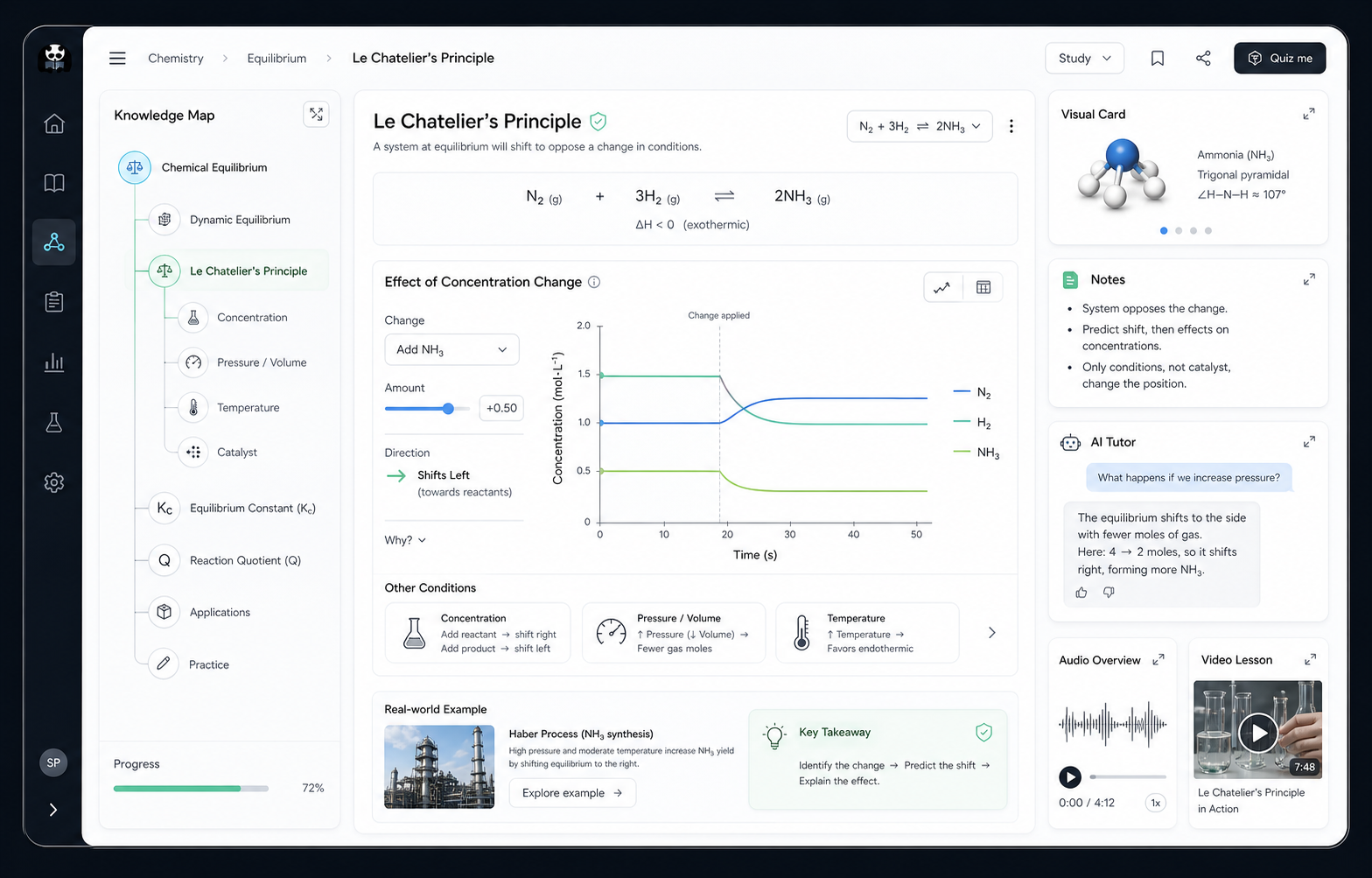
Equilibrium shifts, pressure changes, temperature effects, and exam-style reasoning in one connected module.
Graphs, tangent lines, derivative rules, and practice questions connected through prerequisite logic.
Diffusion, osmosis, active transport, diagrams, and misconception checks as one visual learning path.
Free-body diagrams, equations, simulations, and video explanations organized around Newtonian reasoning.
The product is designed around real study moments: getting unstuck, revising before exams, making abstract ideas visual, and moving from textbook reading to active understanding.
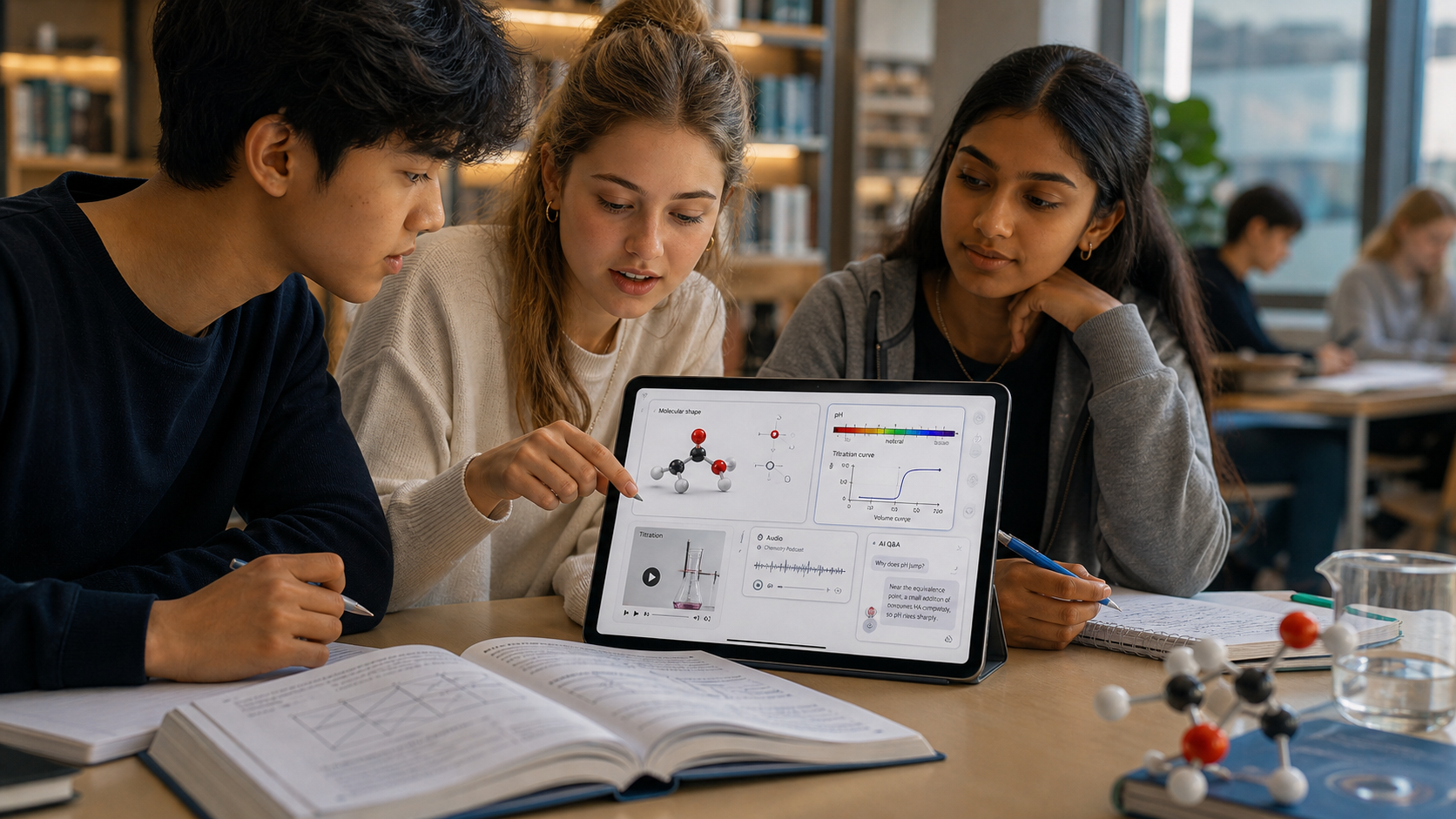
"I can finally see how equilibrium, rates, and acids connect instead of memorizing them as separate chapters."
"The visual cards make review less intimidating, and the AI Q&A helps when a textbook explanation is too dense."
"It gives me a cleaner way to assign prerequisite review before students move into harder exam questions."
TopoLogic starts with A-level, AP, and IB. The goal is simple: make traditional textbooks visual, interactive, conversational, and easier to remember.